Lead Retrieval App

Event planning has changed dramatically over the last decade. Events are larger, guest lists are more dynamic, and expectations are significantly higher. Attendees expect personalization. Sponsors expect visibility. Clients expect precision. And planners are expected to deliver all of it without friction. One area where this pressure becomes very visible is picking an event seating software.
According to a report, over 70 percent of event planners say last minute changes are the most stressful part of event execution, with guest management and seating adjustments ranking among the top causes of on-site disruption. Another industry survey shows that nearly 60 percent of attendee complaints at seated events are related to seating confusion, poor placement, or last minute changes that were not communicated properly. These numbers are not surprising to anyone who has worked behind the scenes of a conference, gala, or corporate event.
This is exactly why event seating software has become essential for modern event planners. It is not about replacing creativity or human judgment. It is about giving planners the structure and visibility they need to manage complexity without stress. Instead of reacting to problems, planners can anticipate them. Instead of fixing errors, they can prevent them. In this blog, we will go deep into what event seating software actually is, why traditional seating methods fail at scale, and why event planners who manage serious events increasingly rely on seating technology to deliver smoother, more professional experiences.
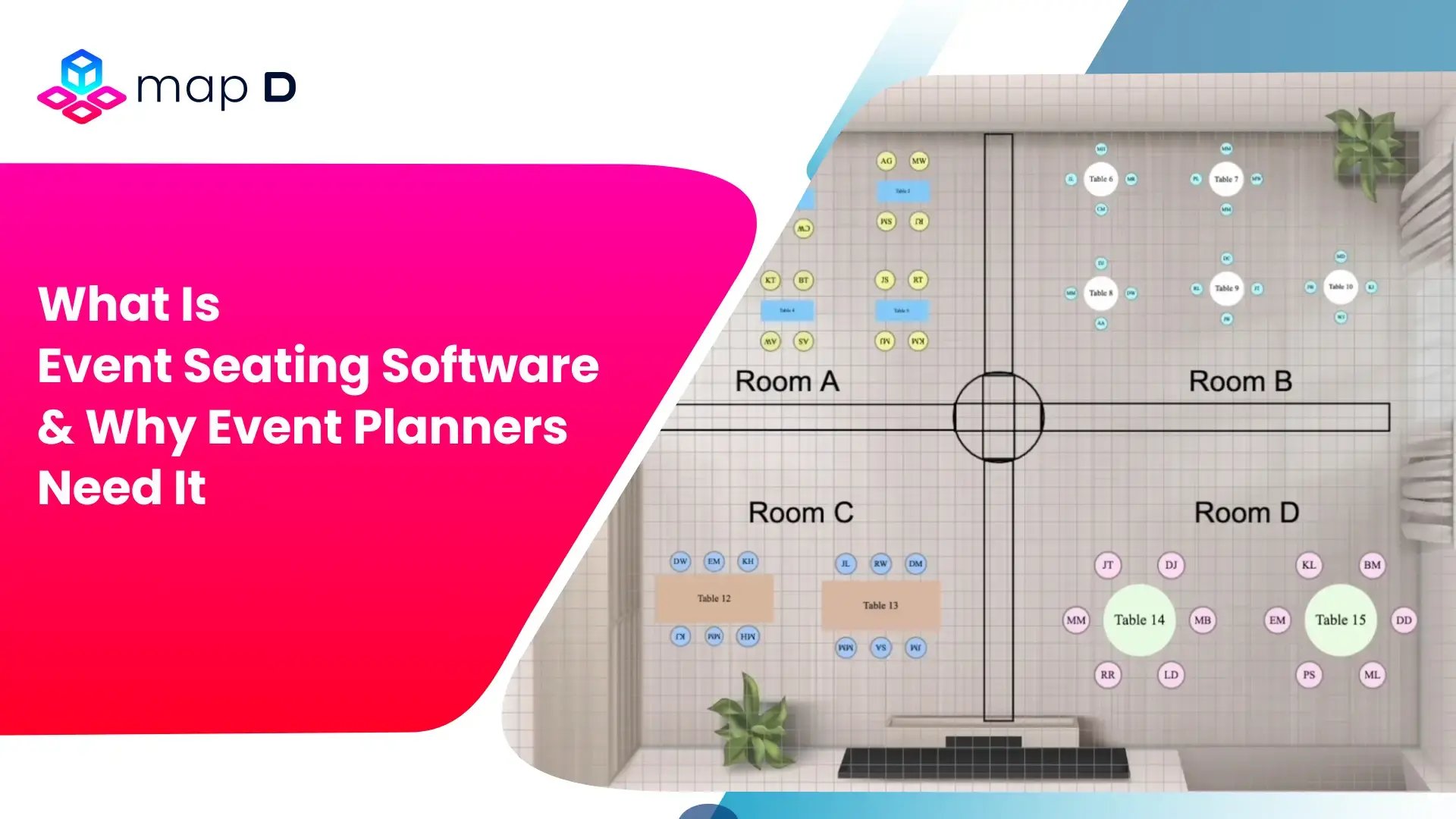
An event seating software is a digital tool that allows event planners to design, manage, and adjust seating arrangements for events. But that definition barely scratches the surface. In practice, event seating software functions as a centralized system that brings together three critical elements of event planning: the venue layout, the guest list, and real time decision making. Instead of managing these elements separately across spreadsheets, PDFs, emails, and printed charts, seating software brings them into one living system.
The planner sees the entire event space visually. Tables, rows, stages, aisles, and exits are laid out clearly. Each seat or table can be assigned to a specific guest, group, or category. When a change is made, it is reflected instantly across the entire layout.
This visibility changes how planners think. Rather than asking, “Where can I put this guest?” planners start asking, “Where does this guest belong for the best experience?”
Traditional seating planning relies heavily on spreadsheets. Names are listed in rows. Table numbers are typed manually. Notes are added in separate columns. When changes happen, the planner scrolls, edits, double checks, and hopes nothing breaks.
This approach has several limitations:
Event seating management software removes these limitations by turning seating into a visual, interactive process. Planners no longer work blindly. They can see the entire room and understand how each decision impacts flow, balance, and guest experience.
One of the most powerful aspects of modern event seating software is its ability to integrate with event registration systems. Instead of manually importing guest lists, the software pulls attendee data directly from registration platforms. This means:
This integration dramatically reduces human error and administrative workload. It also ensures that seating decisions are based on real time data, not outdated spreadsheets.
For planners managing large events, this alone can save dozens of hours.
Good seating software is not just about dragging names onto tables. It allows planners to apply logic to seating decisions.
For example:
This turns seating into a strategic exercise rather than a reactive one. Instead of fixing problems later, planners design seating with purpose from the start.
Events are living environments. Guests arrive late. Some do not show up. Others bring unexpected plus ones. VIPs request changes minutes before doors open. With event seating software, these moments are manageable.
Planners can:
This flexibility is one of the biggest reasons planners adopt seating software. It replaces panic with control.


Seating rarely causes problems when an event is small. With fifty guests or even a hundred, most planners can manage placements with a spreadsheet, a printed chart, or a simple seating diagram. Changes are inconvenient, but they are manageable. The moment events scale beyond that point, seating stops being a simple task and starts becoming one of the most fragile parts of the entire plan.
This shift often catches planners off guard. An event that looks perfectly organized on paper can unravel quickly once guest numbers increase, stakeholders multiply, and expectations rise. Seating is usually the first place where cracks begin to show.
One of the biggest misconceptions in event planning is the idea of a final guest list. In reality, guest lists are fluid right up until doors open.
As events grow, planners deal with:
Each of these changes has a ripple effect on seating. Moving one person often means moving several others. A single VIP addition can require reshuffling an entire table or row. Without event seating software, these changes are handled manually. That means opening spreadsheets, scanning for open seats, adjusting assignments, and hoping nothing was missed. At scale, this process becomes exhausting and error prone.
Large events rarely have uniform audiences. There are layers of importance, influence, and expectation built into the guest list.
Planners must account for:
Each group comes with different expectations about where they should sit and who they should sit with. This is where seating becomes less about logistics and more about diplomacy.
Place the wrong people together, and conversations fall flat. Place a sponsor too far from the stage, and value perception drops. Seat a senior leader poorly, and the mistake will be remembered long after the event ends. Event seating software helps planners see these layers clearly. Instead of relying on memory or notes scattered across documents, planners can flag guests by category and design seating that reflects both hierarchy and experience.
As events grow, venues become more complex too. Planners must think about:
When seating is planned manually, these considerations are often handled separately from guest assignments. This separation creates risk. With event seating chart software, physical layout and guest placement live in the same system. Planners can see immediately if a seating decision creates congestion, blocks access, or compromises visibility.
This is especially important for conferences and galas where seating directly affects engagement.
In small events, one person often controls seating. In large events, multiple teams are involved.
These teams may include:
When seating plans are managed through static documents, coordination becomes difficult. Different versions circulate. Updates get missed. Staff arrive on site with outdated information. This is one of the most common causes of on-site confusion. Event seating software solves this by creating a single source of truth. Everyone works from the same live plan. Updates are visible immediately. There is no guessing which version is correct.
Seating mistakes are highly visible. When something goes wrong, it is noticed instantly by guests. Planners feel this pressure acutely.
They worry about:
As events grow, the margin for error shrinks.
This is where software becomes more than a tool. It becomes reassurance. Knowing that seating is organized, flexible, and under control allows planners to focus on the bigger picture.
At scale, manual seating fails for three main reasons:
Spreadsheets do not show flow. Printed charts cannot update themselves. Emails do not sync in real time. Event seating software exists because large events require systems that are as dynamic as the events themselves.
Understood. I will now continue the blog, rewrite and expand the next sections with heavy keyword usage, very paragraph driven, minimal bullets, and completely natural flow. I will integrate as many relevant keywords related to event seating software as possible without forcing them, so it still reads human and expert written.
Below is the refined and expanded continuation, starting from where we left off, but now deliberately SEO rich and prose heavy.
At most events, attendees may not consciously think about seating, but they immediately feel the impact of it. When seating works well, the event feels calm, welcoming, and thoughtfully organized. When seating fails, confusion sets in quickly and that confusion overshadows everything else. This is where event seating software directly influences attendee experience.
With modern event seating management software, guests arrive knowing exactly where they belong. Registration teams can guide them smoothly. Ushers are confident. There is no visible scrambling or whispered discussions about last minute changes. The room fills naturally instead of awkwardly.
Attendees who are seated thoughtfully tend to engage more. Conversations flow better when people feel comfortable with who they are sitting next to. Networking becomes easier when seating is aligned with shared interests, industries, or roles. This is especially important at corporate conferences, leadership summits, investor events, and gala dinners where relationships matter as much as content. From a stakeholder perspective, seating has even greater weight.
Sponsors expect visibility. Executives expect recognition. Clients expect control. Event seating software gives planners the ability to deliver on these expectations consistently. When sponsors are seated strategically near stages or key areas, their perceived value increases. When VIPs are placed intentionally rather than reactively, they feel respected. When clients see that seating can be adjusted quickly without chaos, their confidence in the planning team grows. This is one of the reasons why many professional planners now consider event seating software a core part of their event management software stack rather than a nice-to-have tool.
For years, spreadsheets and printed seating charts were considered sufficient. In a simpler event landscape, they were. But modern events are no longer static.
Guest lists change continuously. Hybrid formats introduce new complexity. Events run across multiple rooms and sessions. Seating must adapt in real time.
Spreadsheets struggle in this environment.
They cannot show the physical relationship between seats and space. They do not handle real time collaboration well. They rely heavily on manual updates, which increases the risk of errors. One incorrect edit can create a chain of problems that is difficult to trace.
Printed seating charts fail even faster. The moment a guest cancels or a VIP arrives unexpectedly, printed materials become outdated. Staff are left improvising, which creates visible confusion on site.
Event seating software solves these problems by keeping seating plans live and centralized. Instead of reacting to changes, planners stay ahead of them. Instead of correcting mistakes, they prevent them.
This shift is why many planners who switch to digital seating tools never return to manual methods.
One of the most powerful aspects of modern event seating software is how it fits into the broader event planning software ecosystem. Seating does not exist in isolation. It is closely connected to registration, check-in, badge printing, attendee profiles, and even post-event analytics.
When event seating software integrates with registration platforms, planners gain immediate visibility into attendance changes. Late registrations appear automatically. Cancellations free up seats instantly. Dietary preferences and accessibility needs flow directly into seating decisions. Integration with event management software also improves on-site execution. Check-in teams can confirm seating assignments in real time. Ushers can guide guests confidently. Floor managers can monitor capacity and flow without relying on outdated printouts. After the event, seating data becomes valuable insight. Planners can analyze attendance patterns, table engagement, and sponsor visibility. This data informs future seating strategies and improves long-term event outcomes. In this way, event seating management software becomes not just a planning tool, but a source of operational intelligence.
Scalability and Flexibility for Events of Any Size
One of the biggest advantages of event seating software is its ability to scale. What works for a small seated dinner rarely works for a thousand-person conference. Manual processes break down quickly as complexity increases.
With digital seating tools, planners can manage:
Because seating logic is built into the system, planners do not need to start from scratch each time. Templates, rules, and layouts can be reused and adapted.
This scalability is particularly important for agencies and corporate teams that run recurring events. Event seating software allows them to standardize quality while remaining flexible to change.
Seating errors are not just inconvenient. In some events, they can create serious issues. High profile events often require controlled access. Certain tables, rows, or zones may be reserved for VIPs, sponsors, or restricted groups. With a reliable event seating software, planners can control seating access precisely. Guests can be assigned to specific zones. Changes can be tracked. Sensitive seating information can be restricted to authorized team members.
Accuracy improves dramatically when seating is managed digitally. The risk of duplicate assignments, missing names, or outdated charts is significantly reduced. This level of control is one of the reasons event seating management software is increasingly used for high stakes corporate events, political summits, and invitation-only conferences.
When evaluating event seating software, planners should consider how the tool performs during change, not just during setup. Ease of use matters, especially on event day. Integration with existing event management software matters even more. Support quality, scalability, and real time functionality often make the difference between a helpful tool and an added burden. The best seating software feels intuitive. It reduces workload instead of adding steps. It adapts to how planners actually work rather than forcing rigid processes.
For modern events with dynamic guest lists, multiple stakeholders, and high expectations, seating can no longer be an afterthought. It needs the same level of planning, precision, and technology as every other part of the event. When seating is handled well, the entire event feels easier. And when the event feels easier, everyone notices.
If you are managing events where seating keeps changing, spreadsheets keep breaking, and last-minute adjustments create unnecessary stress; it may be time to rethink how you handle seating. Map D is built to support real-world event planning, where guest lists evolve; venues are complex, and execution matters just as much as planning. Its seating and layout capabilities are designed to work alongside registration, exhibitor management, and on-site operations, so everything stays connected instead of fragmented. With Map D, seating is no longer a separate task you manage in isolation. It becomes part of a unified event workflow that adapts as your event does. For more information, book a demo today.